
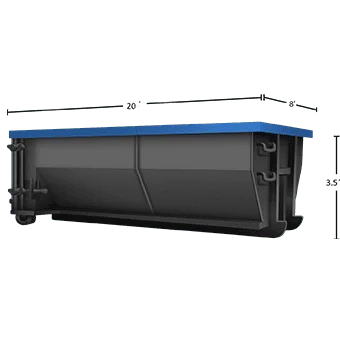
Review the actual container before measuring the site
Container sizes, door arrangements and handling requirements can vary. Ask for the specifications of the offered equipment rather than choosing a position from a photograph or the estimated size of the debris pile. A loading door, if present, needs room to be used without blocking the rest of the project.
Explain the material and how it will be loaded. Furniture, general cleanup debris and dense renovation material can create different volume and weight constraints. The general dumpster guide covers those material and quote questions; this page focuses on the handling space that keeps a roll-off arrangement workable.
Allow for the truck, not only the container footprint
Review the approach from the road, turning and positioning space, overhead conflicts and the placement surface with the coordinator. A container may fit in a space that its delivery vehicle cannot practically use. Do not assume a narrow driveway or a location under overhead obstacles is suitable without the actual handling assessment.
Identify who controls the property and whether the proposed position occupies private space, shared access or public right-of-way. Confirm applicable permission and surface-protection responsibilities. The rental request is not a permit, and this guide does not establish that every driveway or roadside location can be used.
- Describe gates, parked vehicles and any constrained turn.
- Show the proposed loading side and any door clearance.
- Keep emergency routes and normal entrances usable.
Follow the agreed loading limits
Use the container only for material the assigned provider has accepted. Keep uncertain or restricted items out until their handling is resolved. Dense debris can reach a weight limit before the container looks full, while bulky items can consume space quickly; neither the visible fill nor the container name replaces the actual loading instructions.
Follow the agreed fill level and keep loading access controlled. Do not plan on overfilling, moving the container yourself or changing the debris stream without review. If the project also has portable toilets, protect their pedestrian approach from loading traffic and debris.
Keep removal possible as the project progresses
The handling area must remain available for collection or an agreed exchange. Stored material, scaffolding, parked vehicles or a new fence can block an approach that was open at delivery. Review the route before those changes occur, and notify the coordinator if the layout cannot stay as planned.
Identify the person who can confirm readiness and access. A full container does not automatically trigger immediate pickup, and a project delay does not automatically extend the rental. Coordinate the required date and any changed arrangement before depending on it.
Confirm the complete roll-off arrangement
Ask the quote to name the container, permitted material, rental period, delivery and collection, included weight and disposal terms. Clarify exchanges, extra days, overage and any other applicable additional charges without assuming another quote uses the same allowances.
Provide the exact address, proposed position, handling constraints and project schedule. Confirm the actual equipment and dates before treating the container as booked; this guide explains decisions rather than promising available stock or a universal service window.
Questions before you book
Is enough room for the container enough room for delivery?
No. The vehicle needs a suitable approach and handling area, and the actual container may need loading-door clearance. Review the full arrangement with the coordinator.
Can a container be moved after it is placed?
Do not move it yourself. A different position affects handling, surface conditions and eventual removal; coordinate a change first.
What if the container fills before the project ends?
Contact the coordinator to discuss collection or an exchange. Availability, timing and applicable terms must be agreed rather than assumed.
Does a partly empty container always have weight capacity left?
No. Dense materials can reach an agreed weight limit before the available volume is used. Follow the accepted material and loading instructions.